
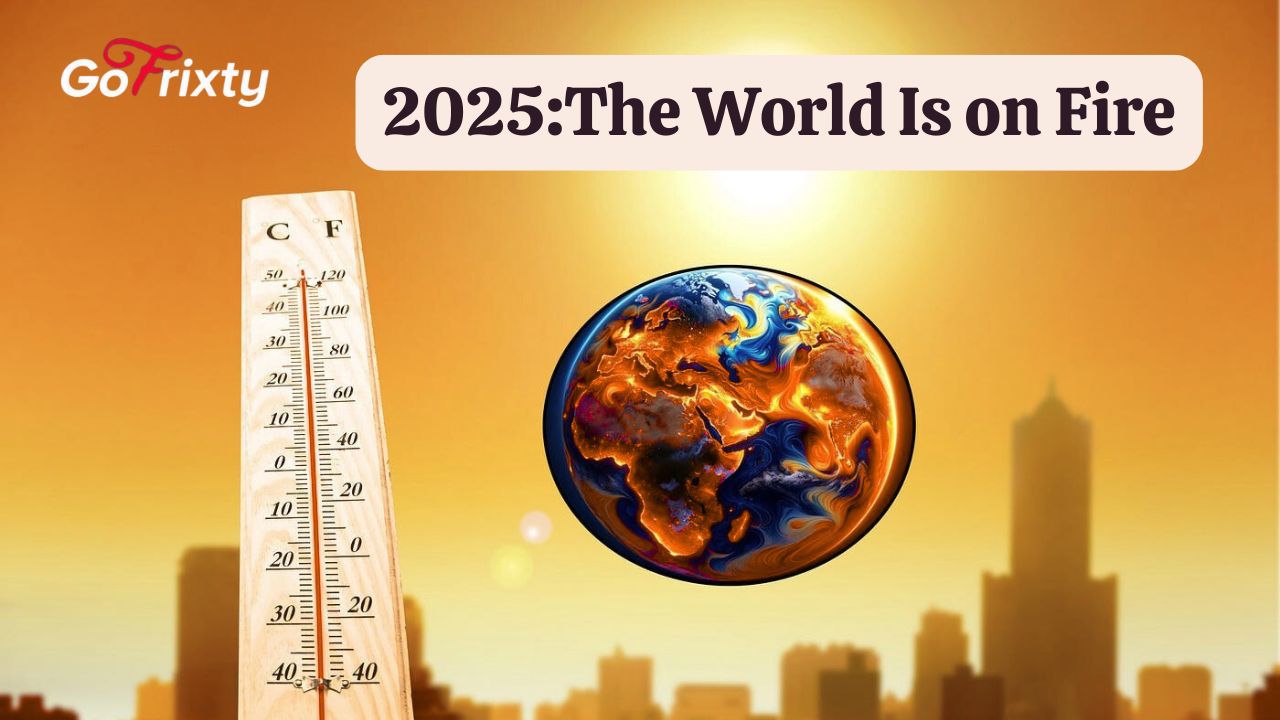
It is a hot summer on the planet. Soaring temperatures, fatal wild fires, and crumbling infrastructure have made 2025 global heatwave one of the most frightening climatic events in the recorded history. Extreme heat is reaching across the board, into Europe and North America, across South Asia and Africa, testing societies to their limit, reminding us all of our collective failure to deal with the ravage of climate change.
Over 50 nations have had a temperature record in the past few weeks. Europe is on its knees today as Madrid hit temperatures of 48°C and Rome experienced more than 45°C in several days. Temperature reached 50C in cities such as Phoenix and Las Vegas in the U.S. causing emergency declarations and overcrowding of hospitals. In South Asia, the wet-bulb temperature which is a combination of heat and humidity exceeded the human survival limit, particularly certain areas of India and Pakistan. More than a dozen have been killed and hundreds more affected by heatstroke and dehydration.
Although scientists have warned about rising temperatures, this heatwave is not simply a sign global warming. According to the experts, it can be attributed to the combination of dramatic and devastating causes: the aftermath of a strong El Niño, massive deforestation, mass urbanization, and, most importantly, our inability to cut carbon emissions. World Meteorological Organization (WMO) ascertained that June 2025 was the hottest month on record in the world history and July might even be hotter than that.
It is not a temporary anomaly, says Dr. Claudia Reitz, an expert on climate systems in Zurich. The 2025 heatwave shows what unchecked emissions and climate inaction look like in real time. It’s a wake-up call for the entire planet.
The human repercussion has been devastating and extremely unequal. On the one hand, the rich may stay in an air-conditioned house or relocate in cooler areas, whilst the poor would have to endure the heat. Millions in informal settlements in Cairo, Karachi and Lagos are facing unbearable heat in their tin-roofed, without electricity and clean water. In southern Europe and southern United States, workers on farms, usually migrants with limited job protection, persist in laboring in fields under hazardous conditions. Indian and Egyptian hospitals are already recording unprecedented numbers of cases of heat-related complications, while public health officials worry it is not over yet.
Not only will humankind suffer the consequences, but agriculture will suffer too. The production of wheat and rice in other countries such as Pakistan, China and Brazil is expected to decline drastically. The interim three-month forecast developed by the Food and Agriculture Organization (FAO) has already cautioned an imminent food price crisis towards the end of the year. Water shortages have also become a crisis in various parts of Africa and in South Asia leading to displacement as well as war fears.
Infrastructures is breaking down. Spain, India and some U.S. power grids have been hit by rolling blackouts as demand on air conditioning has surged. Transport networks are collapsing; rail lines are buckling in the heat in the south of Europe and some airport runways are melting in parts of the Middle East.