Water disputes between Turkey and Iraq have stretched on for decades without a clear solution. The two countries share the Tigris and Euphrates rivers, but they have never agreed on how to divide the water fairly. In October 2025, Turkey and Iraq reached a tentative framework agreement on water sharing and management as drought conditions worsen across the region.
This new agreement marks a shift in how the two countries approach their shared water resources. Iraq depends on these rivers for about 70% of its water supply, making cooperation with Turkey critical for its future. The draft deal comes at a time when temperatures above 50°C and long droughts have reduced water flowing through both rivers.
The agreement could change how millions of people access water in both countries. Understanding what this deal includes and how it might affect the region helps explain why water sharing matters so much in the Middle East.
Key Takeaways
Turkey and Iraq created a draft water sharing agreement in late 2025 after decades without a formal deal
The agreement focuses on managing reduced water flows as drought and high temperatures strain the Tigris and Euphrates rivers
Iraq relies on upstream water from Turkey for most of its supply, making cooperation essential for regional stability
Overview of the Tigris-Euphrates Water Sharing Agreement
The Tigris and Euphrates rivers flow through multiple countries in the Middle East, creating a complex situation where Turkey, Syria, Iraq, and Iran must navigate shared water resources. No comprehensive water sharing agreement currently exists between all parties, though recent diplomatic efforts have produced bilateral deals and memorandums of understanding.
Background and History
The conflict over the Euphrates-Tigris has intensified since the 1960s when countries began implementing unilateral irrigation plans that altered the rivers’ natural flows. Turkey, as the upstream country, controls the source of both rivers and has built numerous dams for hydroelectric power and irrigation.
Syria and Iraq, positioned downstream, have experienced reduced water flows as a result. Political tensions between these nations have made cooperation difficult.
You should understand that no comprehensive basin-wide treaty exists for the Tigris-Euphrates system. The region lacks a water-sharing mechanism that all parties accept, which continues to fuel tensions.
The 2021 memorandum represents the most recent formal step, though it contains limited enforcement mechanisms. Experts advocate for a basin-wide, holistic approach that prioritizes justice and equity for all countries involved.
Past negotiations have struggled because they focused solely on water sharing percentages. This approach reinforced upstream and downstream differences rather than finding collaborative solutions.
Countries Involved
Turkey controls the headwaters of both the Tigris and Euphrates rivers. The country’s dam construction projects significantly impact downstream flows.
Syria receives water from both rivers as they pass through its territory. The nation serves as both a downstream recipient from Turkey and an upstream controller for Iraq.
Iraq depends most heavily on these rivers, with approximately 70% of its water coming from the Tigris and Euphrates. This makes your country extremely vulnerable to decisions made by Turkey and Syria.
Iran comprises parts of the Tigris basin through tributaries that feed into the main river system. While less central to negotiations, Iran remains a stakeholder in the basin’s water politics.
2026 Updates to the Agreement
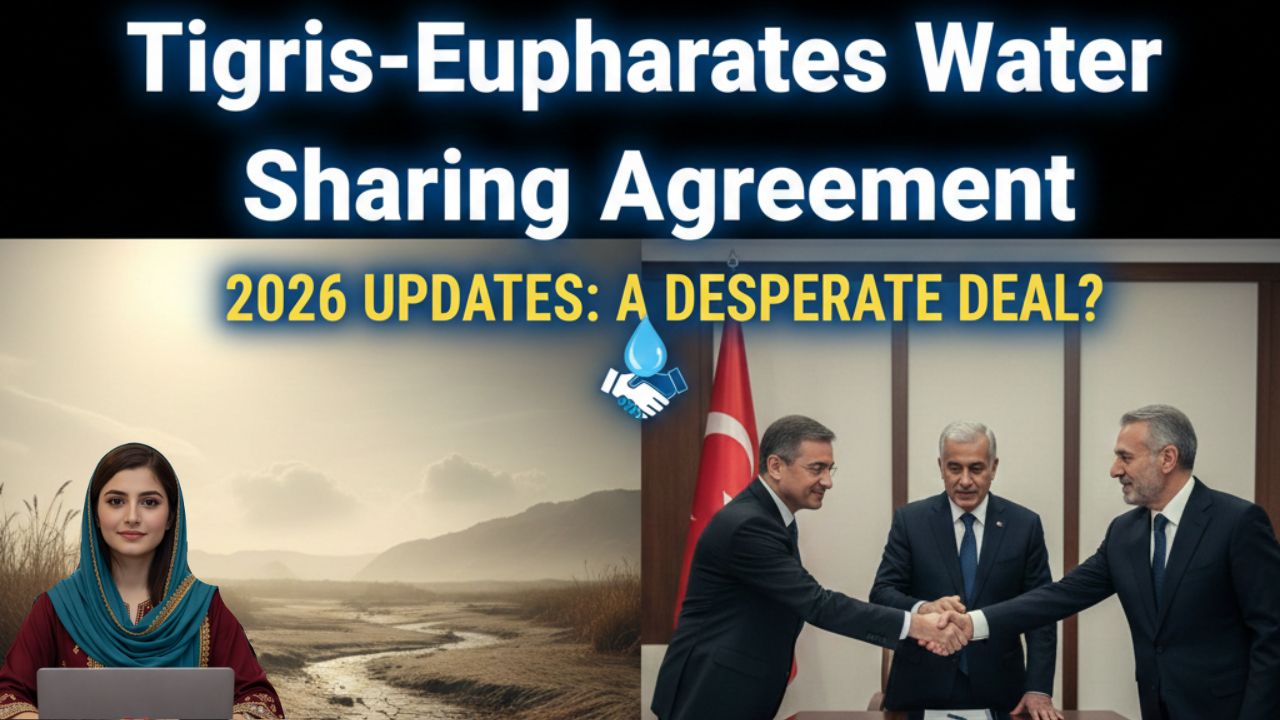
Turkey and Iraq reached a draft framework agreement in October 2025 to address declining water levels in the Tigris and Euphrates rivers, with implementation beginning in early 2026. The agreement focuses on improved water flow rates and collaborative management of shared resources.
Recent Amendments
Turkey and Iraq reached a tentative agreement that marked a significant shift in how both countries approach water sharing. The draft framework agreement aims to manage dwindling flows as drought conditions worsen across the region.
Iraqi Foreign Minister Fuad Hussein announced the agreement would move forward soon after initial discussions concluded. This represents the first major progress between the two countries after decades without a conclusive water allocation agreement.
The amendments focus on joint water projects and cooperative management rather than fixed allocation percentages. You should know that the agreement represents a landmark effort to collaboratively manage the rivers that originate in Turkey and flow into Iraq.
New Provisions Implemented
The Euphrates River has seen dramatic improvements in flow rates. Water flow surged from 240 to 450 cubic meters per second, which represents an 88% increase.
The Tigris River also experienced better conditions. Flow rates from Turkey shifted between 350 and 400 cubic meters per second, according to Iraq’s Water Resources Minister.
These specific flow rates represent concrete commitments rather than vague promises. You can track these measurements to understand how the agreement affects water availability in your region.
The new provisions emphasize infrastructure development and shared management responsibilities between both nations.
Timeline of Key Developments
October 2025: Top diplomats announced the draft framework agreement during a joint news conference.
Late 2025: Flow rate improvements became measurable on both rivers, with the Euphrates showing the most significant gains.
Early 2026: Implementation of joint water management projects began under the new framework.
You should note that Iraq and Turkey never reached a conclusive agreement on water allocation since their independence, making this 2026 progress particularly important. The timeline reflects a new momentum in cooperation after years of disputes.
Impact on Regional Water Management
The 2026 water sharing agreement between Iraq and Turkey establishes new frameworks for managing the Tigris and Euphrates rivers that directly affect how water reaches farms, cities, and industries across the basin. You will see changes in how much water flows to different areas and when it arrives during the year.
Allocation Changes
The historic water sharing deal marks a significant shift in how Turkey and Iraq divide water from the Tigris and Euphrates rivers. Iraq and Turkey have never reached a conclusive agreement on water allocation since Iraq’s independence, making this 2026 agreement a major development.
The new framework aims to address the worsening water crisis through better coordination between the countries. You should know that the agreement focuses on collaborative management rather than strict volume-based quotas. This approach allows for flexible responses to drought conditions and seasonal variations.
Turkey controls the headwaters of both rivers, which has historically given it significant power over downstream flows. The 2026 agreement attempts to balance Turkey’s development needs with Iraq’s water security requirements.
Irrigation and Agricultural Implications
Your access to irrigation water will change based on new release schedules from upstream dams and reservoirs. The transboundary water cooperation
includes provisions for timing water releases to match planting and growing seasons.
Farmers in Iraq face challenges from reduced flows that have occurred in recent years. The agreement addresses these concerns through coordinated dam operations. You can expect more predictable water delivery during critical agricultural periods.
Key agricultural impacts include:
Modified planting schedules based on guaranteed water availability
Reduced irrigation during low-flow periods
Investment in more efficient irrigation systems
Crop selection changes to match water supplies
The water-energy-food nexus shows how water allocation directly affects food production across the basin.
Urban and Industrial Water Use
Cities along the Tigris and Euphrates depend on the rivers for drinking water and industrial operations. You will see changes in how municipal water systems plan for future needs under the new agreement.
The 2026 deal includes provisions for maintaining minimum flows to support urban populations. Iraq’s cities have experienced water shortages that affect daily life and economic activities. Your city’s water supply should become more reliable through better upstream coordination.
Industrial facilities that use river water for cooling and processing must adapt to the new allocation schedules. Power plants and manufacturing operations need consistent water access to maintain production levels.
Political Dynamics and Negotiations
The three riparian countries continue to operate without a comprehensive water-sharing treaty, though negotiations have intensified due to severe droughts and changing regional power structures. Turkey’s position as the upstream nation gives it significant leverage in discussions with downstream Iraq and Syria.
Current Negotiation Status
No binding water-sharing agreement exists between Turkey, Syria, and Iraq for the Tigris-Euphrates system. The absence of comprehensive cooperation agreements has left each country to pursue its own water infrastructure projects without coordinated planning.
Bilateral discussions have replaced multilateral frameworks in recent years. Turkey and Iraq held technical talks in late 2025 regarding minimum flow requirements, but these negotiations have not produced formal commitments you can rely on for long-term water security.
Transboundary water politics have evolved through competitive power dynamics rather than cooperative institutional development. The current negotiation climate reflects broader geopolitical tensions in the region, making water discussions inseparable from other diplomatic issues.
Roles of Turkey, Iraq, and Syria
Turkey controls the headwaters of both rivers and has built multiple large dams that regulate downstream flow. As the upstream nation, Turkey maintains it has sovereignty over water resources within its borders and refuses to recognize the rivers as “shared” international waterways.
Iraq depends heavily on these rivers for agriculture and drinking water, making it the most vulnerable to upstream decisions. Your country has repeatedly requested guaranteed minimum flows but lacks the political or economic leverage to enforce such agreements.
Syria’s role has shifted dramatically following recent political changes. Water has been used to leverage economic and political concessions between neighboring countries throughout the basin’s history.
Environmental and Ecological Considerations
The Tigris-Euphrates basin faces severe ecological pressures from reduced water flows and changing climate patterns. These environmental challenges directly affect the wetlands, wildlife, and agricultural systems that depend on consistent water availability.
River Flow and Ecosystem Health
The rivers support critical wetland ecosystems that need stable water levels to survive. The Mesopotamian Marshes, which were partially restored after 2003, require minimum flow rates to maintain their biodiversity. When upstream dams reduce water flow, these marshlands shrink and salt levels increase.
Reduced flows harm fish populations that local communities rely on for food and income. The lower Euphrates and Tigris now experience periods of extremely low water levels during summer months. This puts stress on native species and allows invasive plants to take over.
The Water-Energy-Food Nexus impacts ecological systems throughout the basin as countries prioritize agriculture and energy production. You should know that endangered species like the Basra reed warbler depend on these wetlands for survival. When water becomes scarce, entire ecosystems collapse and cannot recover without intervention.
Climate Change Influences
Rising temperatures are making water scarcity worse across the region. Climate-related water challenges affect livelihoods and food security in all four riparian countries. Scientists project that the basin will receive less rainfall by mid-century.
Higher temperatures increase evaporation rates from reservoirs and rivers. This means less water reaches downstream areas even when upstream releases stay the same. Climate change impacts on water supply by midcentury will create additional economic consequences beyond the environmental damage.
Droughts are becoming more frequent and severe. You need to understand that these climate shifts make water sharing agreements harder to implement because there is simply less water available for all parties.
International Perspectives and Mediation Efforts
International bodies have worked to facilitate dialogue between Turkey, Syria, and Iraq while regional powers influence negotiations through diplomatic channels and economic leverage.
Involvement of International Organizations
The United Nations and World Bank have attempted to mediate water disputes in the Euphrates-Tigris basin over the past decades. These organizations focus on establishing frameworks for equitable water distribution and environmental protection.
The UN Water program provides technical assistance to help you understand how climate change affects river flows. They offer data collection services and hydrological modeling to all three countries.
However, no comprehensive cooperation agreement governs the Tigris-Euphrates system between the riparian countries. This creates challenges for international mediators trying to establish binding commitments.
The European Union has funded water management projects in the region. Their support includes infrastructure assessments and capacity building programs for local water authorities.
Diplomatic Relations
Turkey maintains upstream control over both rivers and uses water policy as leverage in broader regional negotiations. Syria and Iraq depend heavily on these water flows for agriculture and drinking water.
The countries have established joint governance mechanisms at different levels despite ongoing political tensions. These include technical committees and ministerial meetings that address immediate water management concerns.
Iran plays a role as a riparian state on the Tigris tributaries. Your understanding of the basin requires recognizing that four countries share the transboundary waters.
Bilateral talks between Iraq and Turkey have produced temporary water sharing arrangements. These agreements often link water releases to economic cooperation and security matters.
Future Outlook for Tigris-Euphrates Cooperation
The Tigris-Euphrates basin faces growing water scarcity that will test cooperation between Turkey, Iraq, Syria, and Iran in the coming years. Climate change and rising demand will require new approaches to water management and sharing.
Anticipated Challenges
Water scarcity will continue to intensify across the basin as climate change reduces available resources. Growing water scarcity is likely to increase competition over water and could lead to more local violence between different groups.
Turkey, Iraq, and Syria have experienced significant tension and conflict over water usage since the 1960s. These disputes remain unresolved today.
You should understand that negotiations focused solely on water sharing reinforced upstream and downstream differences, making water gains and losses more prominent. This approach has historically prevented progress toward lasting agreements.
The lack of a conclusive water allocation framework between countries creates ongoing uncertainty. Population growth and agricultural demands will put additional pressure on limited water supplies.
Opportunities for Sustainable Water Sharing
Cooperation among riparian states can use water as a catalyst for broader regional benefits beyond simple resource sharing. This approach can foster regional stability, economic development, and sustainable management.
You can benefit from understanding that flexible and specific water allocation mechanisms improve cooperation during times of water scarcity. Strong institutional frameworks help countries adapt to changing conditions.
Turkey and Iraq began exploring new joint water projects in recent years, creating momentum for water negotiations. These cooperative efforts represent a shift from past conflicts.
Joint management of water resources alongside energy and food security offers potential solutions. Countries that coordinate infrastructure development and data sharing can maximize benefits for all parties involved.



[…] Tigris-Euphrates Water Sharing Agreement 2026 Updates: New Regional Cooperation Framework […]