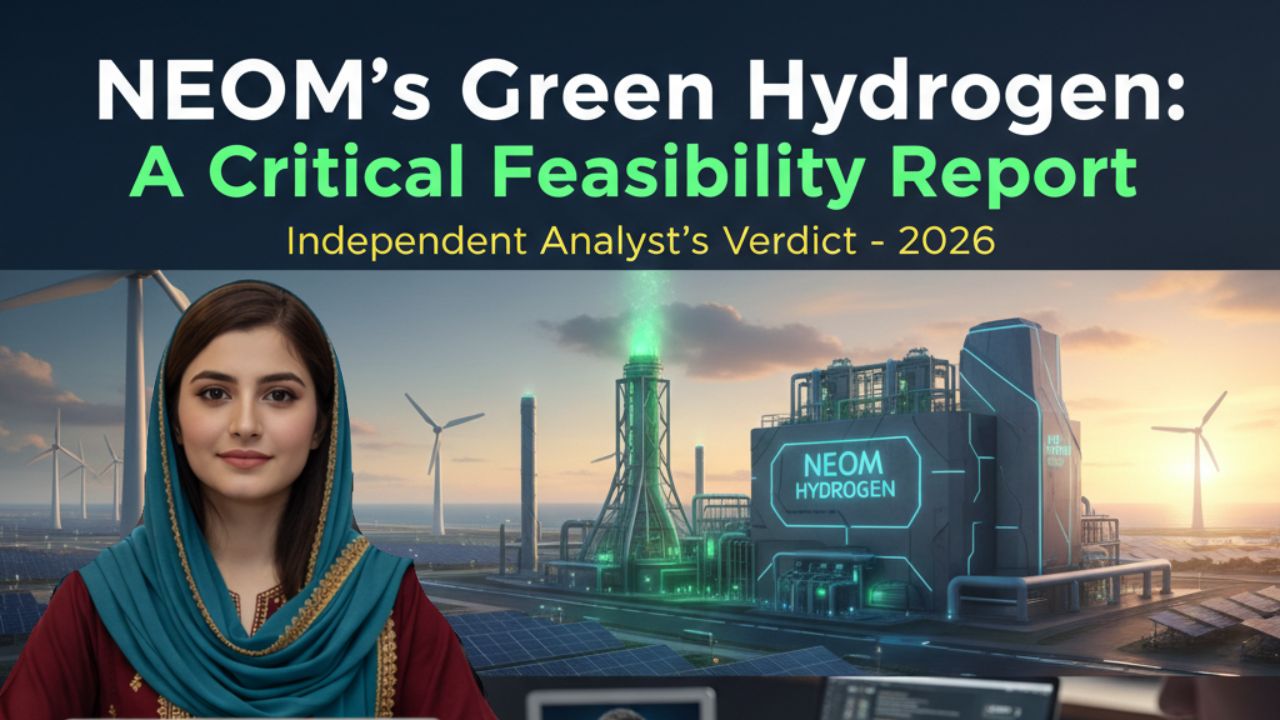
Saudi Arabia’s NEOM Green Hydrogen Project represents a significant development in the clean energy sector, combining renewable power generation with hydrogen production at an unprecedented scale. The project, a joint venture between NEOM, Air Products, and ACWA Power, is developing the world’s largest utility-scale green hydrogen facility with a total investment value of $8.4 billion, designed to produce 600 tonnes of clean hydrogen daily when it becomes operational in 2027.
You’ll find that this feasibility assessment examines the project’s technical capabilities, financial structure, and market positioning within the broader context of Saudi Arabia’s energy transition goals. The facility integrates four gigawatts of renewable power from solar and wind sources to drive electrolysis processes, converting water into hydrogen without carbon emissions. Construction reached 80% completion as of early 2025, with major equipment including electrolysers and hydrogen storage vessels already installed at the NEOM site.
Understanding the feasibility of this project requires examining multiple dimensions, from NEOM’s geographic advantages and technical infrastructure to the economic viability of producing 1.2 million tonnes of green ammonia annually. The analysis covers how the project addresses conversion and export logistics, its financial backing from 23 international banks, and its potential impact on global hydrogen markets and emission reduction efforts.
Project Overview and Strategic Background
The NEOM Green Hydrogen Project represents a $8.4 billion investment in what is designed to be the world’s largest utility-scale green hydrogen facility powered entirely by renewable energy. This commercially-based facility at Oxagon within NEOM spans multiple integrated components and aims to produce 650 tons of green hydrogen daily by leveraging the region’s abundant solar and wind resources.
Purpose and Vision
The NEOM Green Hydrogen Project serves as a cornerstone initiative demonstrating how Saudi Arabia can achieve large-scale decarbonization through advanced clean energy technology. Your understanding of this project begins with its core purpose: converting water into carbon-free hydrogen through electrolysis processes powered by renewable energy sources.
The facility will produce up to 1.2 million tons of green ammonia annually for export to global markets. This production capacity positions the project to reduce carbon emissions by approximately 5 million metric tons per year. The complex includes a 2 GW hydrogen electrolysis plant, an air separation unit, hydrogen and nitrogen storage facilities, and a green ammonia plant capable of producing 5,000 tons daily.
By 2026, you can expect this facility to begin operations and establish NEOM as a significant player in the emerging global hydrogen economy.
Key Partners and Shareholders
NEOM Green Hydrogen Company (NGHC) operates as an equal partnership between three major entities. ACWA Power, a leading Saudi power developer, holds a 33.3% stake alongside Air Products, a global industrial gases company with the same ownership share. NEOM, the megacity development company, completes the partnership with its matching third of ownership.
In May 2023, NGHC secured $6.1 billion in financing from a consortium of 23 local, regional, and international banks and financial institutions to cover the majority of the project’s estimated $8.4 billion total cost. This public-private partnership structure allows you to see how Saudi Arabia is attracting international expertise and capital to accelerate its energy transition goals.
Air Products will serve as the exclusive off-taker of the green ammonia produced, managing its distribution to global markets.
Alignment with Saudi Vision 2030
The project directly supports your country’s Saudi Vision 2030 economic diversification and sustainability objectives. By establishing green hydrogen production capacity at NEOM, Saudi Arabia advances its goal of becoming a leading clean energy exporter while reducing dependence on oil revenues.
NEOM’s $500 billion giga-project provides the ideal testing ground for demonstrating how cutting-edge technology and strategic partnerships can achieve ambitious decarbonization targets. The hydrogen facility exemplifies the Vision 2030 framework by creating new industrial sectors, attracting foreign investment, and developing specialized workforce capabilities.
As of recent reports, construction has reached 90% completion across all sites, positioning the project for commissioning in 2026. This timeline aligns with Saudi Arabia’s broader strategy to capture early market share in the global hydrogen economy before widespread commercial deployment begins.
Location and Site Advantages
NEOM’s green hydrogen project benefits from strategic positioning in northwest Saudi Arabia, where exceptional renewable resources and purpose-built infrastructure converge at Oxagon. The location provides access to high solar irradiance, consistent wind patterns, and Red Sea proximity for water supply and export logistics.
Oxagon Industrial Zone
Oxagon serves as the industrial heart of NEOM, spanning over 300 square kilometers along the Red Sea coastline. This next-generation industrial city was specifically designed to accommodate advanced clean energy facilities and integrate them with manufacturing capabilities.
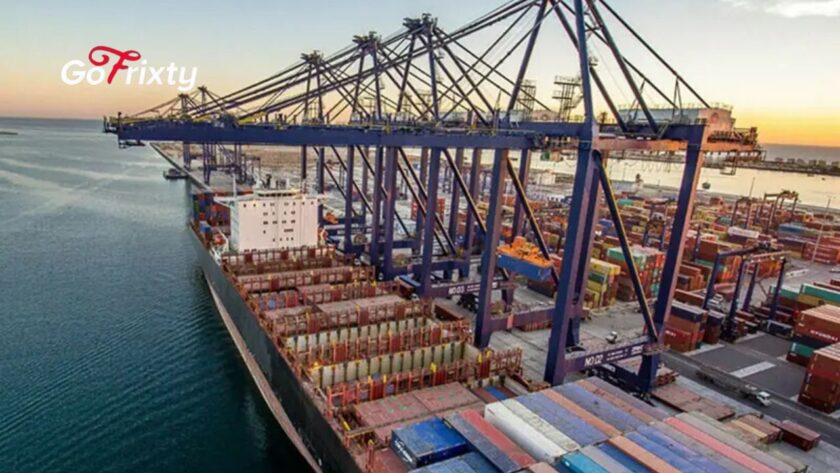
The site positions your hydrogen production facility within a broader industrial ecosystem focused on sustainability. You gain access to integrated port facilities that streamline the export of green ammonia to international markets. The coastal location also provides direct seawater access for desalination operations, which supply the water needed for electrolysis.
Oxagon’s infrastructure is being developed to support circular economy principles and zero-carbon operations. This includes dedicated utility networks, waste management systems, and transportation corridors designed for industrial-scale clean energy production.
Renewable Resource Availability
The NEOM region offers exceptional conditions for renewable energy generation, with solar irradiance levels among the highest globally and consistent wind speeds throughout the year. Your project can harness these resources through dedicated wind farms and solar parks built specifically to power hydrogen production.
The site receives approximately 2,600 kWh/m² of annual solar radiation, making photovoltaic generation highly efficient. Wind patterns from the Red Sea provide reliable speeds averaging 7-8 m/s, supporting stable power output from turbine installations.
These combined renewable resources enable continuous hydrogen production with minimal grid dependency. The co-location of generation assets with the production facility reduces transmission losses and improves overall system efficiency.
Site-Specific Infrastructure
NEOM’s green hydrogen facility includes a dedicated transmission grid connecting renewable generation sites to the electrolysis plant. This private network ensures reliable power delivery without competing with other regional electricity demands.
The infrastructure encompasses water desalination plants that convert Red Sea water into the ultra-pure water required for electrolysis. You also benefit from storage facilities, processing units for ammonia conversion, and loading terminals designed for hydrogen carrier export.
Transportation infrastructure connects the site to both maritime shipping routes and potential future pipeline networks. The development includes worker accommodation, maintenance facilities, and control centers that support round-the-clock operations at this remote desert location.
Technical and Operational Feasibility
The NEOM green hydrogen project demonstrates technical viability through proven integration of renewable energy systems with advanced electrolysis technology at utility scale. The facility’s design addresses critical operational requirements including power generation capacity, hydrogen production efficiency, and storage infrastructure.
Green Hydrogen Production Technology
The NEOM green hydrogen production facility utilizes established electrolysis technology scaled to unprecedented levels for commercial deployment. You’ll find the project incorporates integrated systems designed to produce 600 tonnes of green hydrogen daily when fully operational.
The production methodology eliminates carbon emissions by relying exclusively on renewable electricity to split water molecules. This approach differs fundamentally from conventional hydrogen production methods that depend on fossil fuels.
The facility’s technical specifications target output suitable for conversion into ammonia, enabling efficient transport to global markets. Your understanding of the project’s scope should include its position as the world’s largest commercially-based hydrogen facility powered entirely by renewable sources.
Renewable Power Generation Integration
The project integrates 4 gigawatts of renewable power generation capacity split between solar and wind resources. You access this energy through a dedicated wind garden and solar photovoltaic arrays specifically designed to power the electrolysis operations.
The renewable infrastructure operates continuously to maximize hydrogen production uptime. Wind and solar resources in the NEOM region provide complementary generation profiles that enhance overall system reliability.
Power integration systems include advanced grid management technologies that match electricity supply with electrolyser demand patterns. Your facility benefits from the region’s abundant solar irradiation and consistent wind conditions that support high-capacity factor operation.
Electrolysis Plant and Electrolyser Deployment
The electrolysis plant houses industrial-scale electrolysers with combined capacity aligned to process the 4 GW renewable power input. You deploy modular electrolyser units that allow for phased commissioning and operational flexibility.
The system integrator coordinates multiple subsystems including water treatment, power conditioning, and gas separation equipment. Each electrolyser unit converts purified water and electricity into hydrogen and oxygen through established electrochemical processes.
Technical specifications emphasize proven technologies rather than experimental systems to ensure operational reliability. Your plant design incorporates redundancy measures and maintenance protocols suitable for continuous industrial operation.