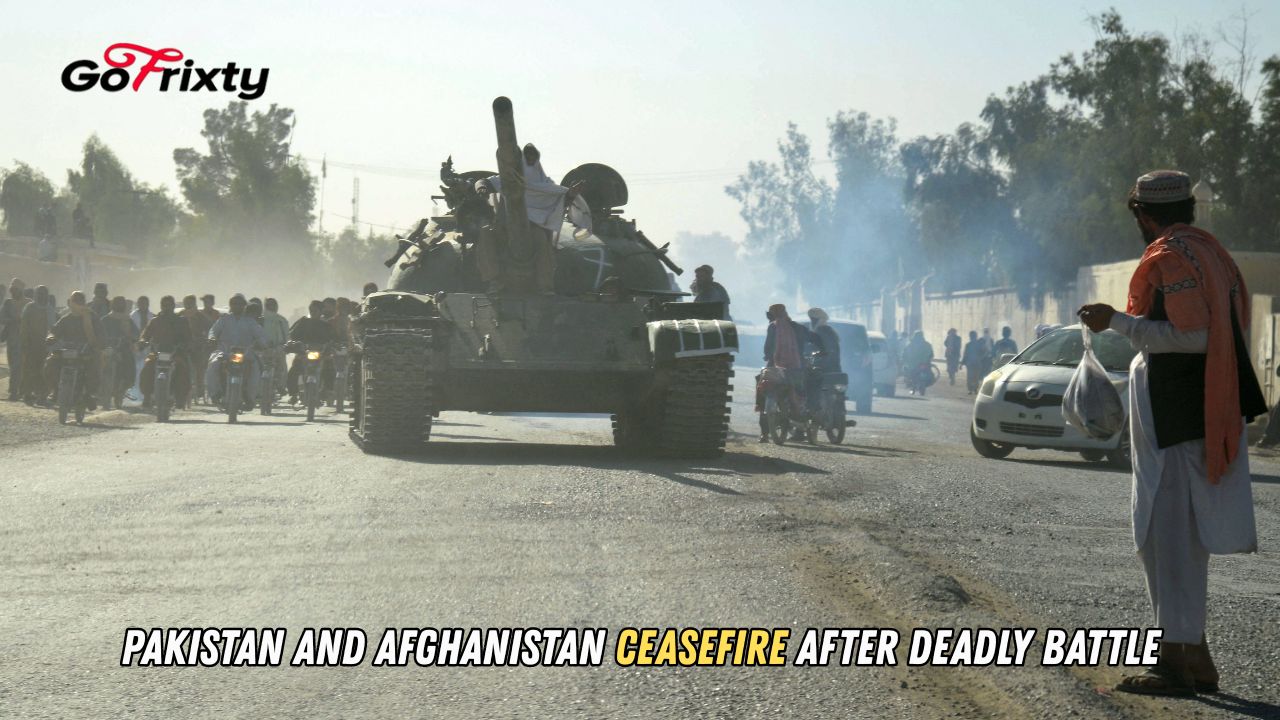
Pakistan and Afghanistan have declared a 48-hour ceasefire following one of the deadliest border encounters in recent history. The clashes that took place around Spin Boldak and Chaman have left dozens dead and hundreds more wounded, leading to appeals% desperate appeals% name% from both countries for a cessation of violence.
The incident began with Pakistan’s accusation that Afghanistan’s Taliban government was providing refuge to militants who had attacked Pakistani territory. Kabul rejected the allegation, calling Pakistan’s air strikes “unprovoked & greatly beyond the bounds of reason”. What began as small exchanges became several days’ head-on firing and aerial bombing, destroying border towns and driving local people from their homes.
By day’s end Saturday at least 18 people were dead and more than 360 injured, according to the United Nations. Witnesses told of fleeing panic-striken as artillery shells landed near civilian areas, damaging schools, shops and homes. As military convoys continued to block the roads, hospitals on both sides of the border struggled to treat the swelling number of casualties.
Faced with growing humanitarian concerns from advocates in their countries, both governments agreed to a truce. Islamabad said it will let “humanitarian access & diplomatic dialogue” proceed, while Afghan officials termed the cease-fire a chance to reassess and avoid more bloodshed.
For the border town communities, the ceasefire also brought an exquisite sense of release. Evacuated families began returning to their homes and memories of fear and anxiety still weigh heavily on them. Local traders have tentatively resumed their shops, essential supplies are being restored by military escorts.
Security analysts see the ceasefire as a crucial, if temporary, break-through. Most believe that if calm and conversation continue, this breathing space may pave the way towards a comprehensive border security framework that keeps incidents like these from occurring in future. Equally, others warn that unless there is real cooperation and sharing of intelligence, tensions could return again fast.
At this moment both states seem to be ready back off from them. The guns have fallen silent, the air cleares, & for people living by the border peace–if only briefly–feels like a rare and fragile victory.